Calgary’s record-setting pace of housing construction is beginning to moderate. But there is an important difference between fewer homes starting construction and less construction happening.
For the solar industry, that difference could define the next 12 to 18 months.
Calgary recorded 27,684 housing starts in 2025, up 13.6% from 2024. Apartments alone accounted for 14,821 starts. [regionalda…alberta.ca]
That pace is now easing. Across the Calgary area, 17,612 homes started construction through September 2026, about 16% below 2025’s record pace.
[homm.ca]Yet the buildings already underway tell another story.
Within the City of Calgary,
24,236 homes were under construction in Q3 2026, up 1,870 from a year earlier.
[calgary.ca]In other words, the leading edge of the market is cooling while builders and trades still have an exceptionally large amount of work moving through the system.
There are good reasons to expect fewer starts.
Calgary’s rental vacancy rate rose from 4.6% in 2024 to 5.1% in 2025, and CMHC forecasts 5.7% in 2026 and 6.2% in 2027. Developers therefore have to be more selective about adding rental supply.
[calgary.ca]CMHC also expects national housing starts to decline as developers deal with weaker demand, elevated inventories and high construction costs. But importantly for Alberta, Prairie construction is expected to remain above historical averages.
[cmhc-schl.gc.ca]Our read is therefore not that Calgary is heading into a construction drought. It is that 2027 should remain active because of today’s enormous pipeline, while the volume of new projects entering behind it becomes more selective.
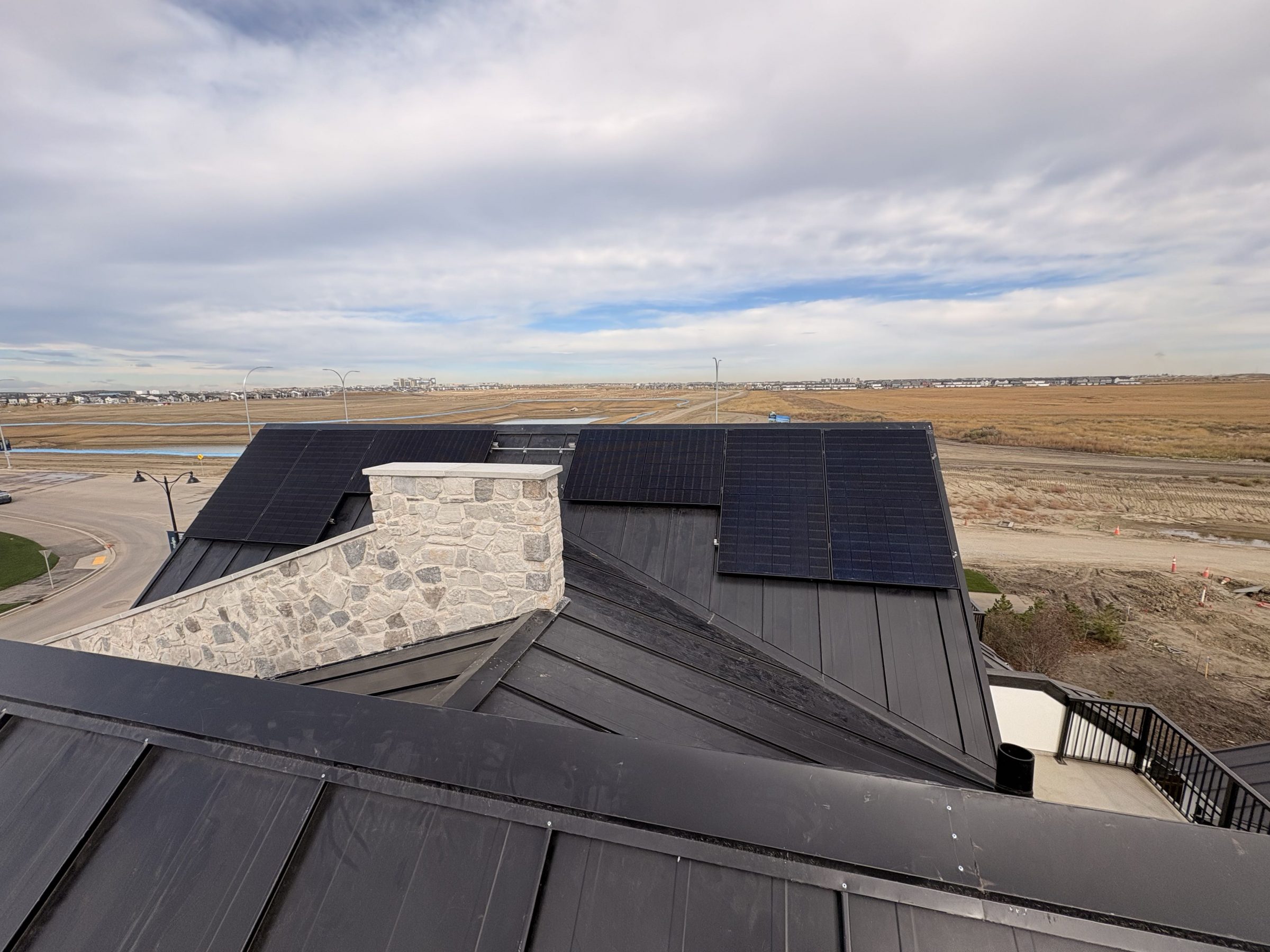
A new multi-family residential building does not have to install a large solar array on opening day for solar to influence its design today.
Decisions being made while Calgary’s current housing pipeline is under design and construction can determine whether solar is straightforward or unnecessarily expensive later.
Take roof design. Mechanical equipment, vents, setbacks and access routes can fragment otherwise useful solar area. Structural assumptions can influence what can eventually go on the roof. And electrical design determines how simple or difficult it will be to connect future generation.
Add EV charging and building electrification, and those decisions become increasingly interconnected.
That creates a practical opportunity for developers: preserve optionality before committing capital.
A developer that isn’t ready to purchase solar today can still evaluate the likely array footprint, keep appropriate roof areas clear, consider structural loading, identify inverter and electrical locations, and provide sensible conduit pathways while the building is being designed.
The cost and disruption of thinking through those items on drawings can be very different from solving them after the roof, electrical rooms and mechanical systems are finished.
Over the next 12 to 18 months, solar companies should not assume that the record volume of 2025 housing starts will simply continue.
But neither should they mistake slowing starts for a lack of opportunity.
Calgary already has a huge stock of buildings moving toward completion. Much of the industry’s near-term opportunity is therefore inside the pipeline that already exists.
The best solar conversation may not be “Should we install panels right now?”
It may be:“What should we do now so this building can economically install them when the numbers make sense?”
With less starts a likely outcome in the next 12-18 months, will there be added emphasis on the quality of those homes?
Often a slow down in the industry does wonders to weed out those who were bringing very little or no value to the table. In a new world where the goal might not be volume based, we hope that quality, resiliancy, and workmanship find their way back into more homes in the City.